A website redesign in the UK typically costs between a few thousand and tens of thousands of pounds, depending on scope, and most small businesses land somewhere in the mid-thousands for a proper professional job. These are all UK prices excluding VAT, and they come from current market benchmarking on UK redesign costs.
Your next move should be simple: get an itemised quote before you sign anything, not just a single lump-sum figure. The breakdown should include design, development, content, testing, and post-launch activities. Without such detail, it's difficult to compare suppliers fairly.
Here's how the main commissioning routes stack up on price:
- DIY site builders (Wix, Squarespace): from £0 to around £320 a month, per Expert Market's cost analysis
- Freelancers: typically £960 to £1,500 for a small site, or £50 to £150 per hour
- Small agencies: from roughly £3,000 upwards for a professional small business build
- Bespoke/enterprise agencies: £15,000 to £60,000+ for complex B2B or ecommerce projects, according to SpotDev's UK market data
Pro Tip: Most guides quote SME averages around £2,500 to £4,000 for a straightforward redesign. If a quote comes in well under that for genuinely custom work, ask what's being cut. It's usually testing, content, or post-launch support.
Key Takeaways
A UK website redesign for a typical SME costs £3,000 to £8,000, with the exact figure driven by page count, integrations and platform choice rather than supplier reputation alone.
| Point | Details |
|---|---|
| Know your price band | Expect £1,500–£5,000 for a visual refresh and £3,000–£8,000 for a full small business redesign, ex VAT. |
| Get an itemised quote | Compare suppliers on line-item breakdowns, not single totals, to spot hidden costs before signing. |
| Calculate 3-year TCO | Factor hosting, maintenance and subscriptions into your total, not just the upfront build fee. |
| Prepare content early | Have copy and images ready before development starts to avoid timeline and cost overruns. |
| Talk to Jarvis & Co | Request an itemised quote from Jarvis & Co if you want a redesign scoped around measurable business outcomes. |
Table of Contents
- How much does a website redesign cost by route in the UK?
- What does a website redesign cost by site type?
- Upfront costs versus ongoing costs: what's the real total?
- What factors push a website redesign price up or down?
- How do agencies charge and how long does a redesign take?
- How do you brief and compare website redesign suppliers?
- What do sample UK website redesign budgets actually look like?
- What does a real UK website redesign project look like?
- Where can you save money without hurting the finished site?
- When is a website redesign actually worth the spend?
- How can Jarvis & Co help with your website redesign?
- Frequently asked questions
- Sources
How much does a website redesign cost by route in the UK?
The route you choose changes everything about what you're actually paying for. A £300-a-month Wix subscription and a £15,000 bespoke build both produce "a website", but they solve completely different problems.
Website builders work well when your needs are simple and your time is limited. You're paying for a template, hosting, and a drag-and-drop editor, not custom strategy or design thinking. Freelancers sit in the middle ground: often cheaper than agencies, sometimes just as skilled, but you're relying on one person's availability and won't get the layered skillset (design, dev, SEO, project management) that a small team provides. Small agencies bring that team, with structured process and accountability, for a price that reflects it. Bespoke and enterprise agencies exist for businesses where the website is a genuine revenue engine, not a digital brochure, and integrations, custom code and conversion optimisation justify the higher spend.
| Route | Estimated upfront price range | Best for | What's included | Ongoing costs | Timeline |
|---|---|---|---|---|---|
| DIY site builder | £0–£320/month | Sole traders, very early start-ups | Template, basic hosting, limited customisation | Monthly subscription, paid apps/templates | 1–2 weeks |
| Freelancer | £960–£1,500 (or £50–£150/hr) | Simple brochure sites, tight budgets | Design, basic build, limited content support | Hosting, occasional updates | 2–6 weeks |
| Small agency | £3,000–£8,000 | Small businesses wanting a professional finish | Design, development, content guidance, basic SEO | Hosting, maintenance retainer | 4–8 weeks |
| Mid-size/bespoke agency | £8,000–£60,000+ | Growing SMEs, ecommerce, B2B firms | Full design, custom development, integrations, SEO, testing | Retainer, hosting, ongoing SEO | 8 weeks |
DIY builders — pros: fast, cheap, no technical skill needed. Cons: limited design flexibility, weak SEO foundations, you're doing all the work yourself.
Freelancers — pros: lower cost than agencies, direct communication. Cons: single point of failure, variable quality, limited capacity for scope changes.
Small agencies — pros: proper process, multiple skillsets, more reliable delivery. Cons: pricier than freelancers, less flexible than DIY for tiny tweaks.
Bespoke agencies — pros: strategic input, custom functionality, built to convert. Cons: highest upfront cost, longer timelines.
If you're a sole trader testing an idea, a builder is fine for now. If your website needs to actually generate enquiries or sales, a small agency or bespoke build almost always pays for itself faster.
What does a website redesign cost by site type?
Your site type matters more than almost any other variable when budgeting. A five-page brochure site and a 200-product ecommerce store aren't remotely comparable projects, even if both get called "a redesign".
| Site type | Typical upfront cost | Typical ongoing costs | Typical timeline |
|---|---|---|---|
| Brochure/basic (5–10 pages) | £1,500–£5,000 | £15–£50/month hosting, occasional content updates | 2–4 weeks |
| Small business (10–20 pages) | £3,000–£8,000 | £30–£50/month hosting and maintenance | 4–8 weeks |
| Ecommerce | £10,000–£60,000 | £50–£200+/month (hosting, payment gateway, plugins) | 8–14 weeks |
| Specialist/custom (bookings, portals, integrations) | £15,000–£60,000+ | £100–£400+/month | 12–20 weeks |
Platform choice shapes both the upfront number and what you'll pay every month after launch. WordPress paired with WooCommerce gives you full ownership and flexibility, but you carry more responsibility for hosting, security and updates. Shopify bundles hosting and security into its subscription, which suits small ecommerce brands that want less to manage, though transaction fees and app costs add up. Wix and Squarespace are quickest to launch and cheapest upfront, ideal for brochure sites, but they hit a ceiling fast if you need bespoke functionality or complex integrations.
- Choose a platform like Wix or Squarespace when your site is genuinely simple and speed to launch matters more than customisation.
- Choose WordPress with WooCommerce when you want full control over design, functionality and data, and you're willing to pay a developer for ongoing care.
- Choose Shopify when ecommerce is your core business and you'd rather pay a monthly fee than manage server infrastructure yourself.
- Justify custom development only when off-the-shelf platforms genuinely can't deliver what your business model needs (complex booking logic, unusual integrations, high-traffic performance requirements).
Upfront costs versus ongoing costs: what's the real total?
The number on a quote is never the number you'll actually spend in year one. Hosting, domains, SSL certificates, maintenance and content updates all sit outside the initial build fee, and they compound over three years in ways that catch a lot of business owners off guard.
Typical upfront (one-off) costs:
- Design and UX work
- Development and build
- Project management
- Testing and quality assurance
- Content and SEO migration from the old site
- Photography or new imagery
- VAT at 20%, added on top of the net fee for VAT-registered agencies
Typical recurring (ongoing) costs:
- Hosting: from around £10 to £50+ a month depending on traffic and platform
- Domain renewal: typically £10–£20 a year
- SSL certificate: often bundled free with hosting, sometimes a separate line
- Content updates and copy refreshes
- Security monitoring and maintenance retainers
- Platform or plugin subscriptions (Shopify apps, WordPress plugins, Wix add-ons)
GoDaddy's UK cost breakdown shows just how wide the gap can be: a very basic site can run from around £100 a year in ongoing costs, while a professionally designed site with hosting, SSL and domain bundled in can reach several thousand pounds in its first year alone.
Take a small business redesign costing £5,000 upfront with £50/month hosting and maintenance. Year one totals roughly £5,600. An ecommerce redesign at £20,000 upfront with £150/month in hosting, apps and payment fees comes to about £21,800 in year one, then £1,800 a year after that. That second number is the one most business owners forget to plan for.
Pro Tip: Ask every supplier for a 3-year total cost of ownership figure, not just the build price. A higher upfront quote can produce a lower 3-year total if it includes better-built maintenance and fewer emergency fixes down the line.
What factors push a website redesign price up or down?
Scope decisions, not supplier choice, are usually what separates a £3,000 quote from a £15,000 one. Understanding the levers gives you real control over your final bill.
- Number of unique page templates: every distinct layout (homepage, product page, case study, contact) adds design and build time.
- Bespoke code versus off-the-shelf components: custom functionality costs more than configuring existing plugins or apps.
- Integrations: CRM connections, booking systems, payment gateways and marketing tools all add development hours.
- Ecommerce complexity: product variants, stock syncing and multi-currency support scale cost fast.
- Multilingual requirements: each additional language roughly multiplies content and testing work.
- Accessibility standards: building to WCAG guidelines from the start costs less than retrofitting later.
- UX research and testing: user testing rounds add time but reduce costly post-launch redesign work.
- Content production: professional copywriting and photography are often underestimated line items.
Regional pricing varies too. Agencies based in central London commonly charge more than regional firms doing equally strong work, largely down to overheads rather than skill. For most SMEs, an agency's experience in your sector matters more than its postcode. A firm that has built ten ecommerce sites for independent retailers will likely serve you better than a generalist central London studio, whatever the rate card says.
Pro Tip: Reuse one well-designed template across similar page types (service pages, blog posts, product categories) instead of commissioning a bespoke layout for every single page. It cuts design and QA time significantly without making the site look generic, provided the template is flexible enough to handle different content lengths.
How do agencies charge and how long does a redesign take?
Quotes come in four common shapes, and knowing which one you're looking at helps you spot hidden costs before you sign anything.
- Fixed-price: one agreed total for a defined scope. Most common for small business and brochure site redesigns where requirements are clear upfront.
- Time-and-materials (hourly): you pay for actual hours worked, typically £50–£150/hr per UK freelancer and developer rates. Common when scope is likely to shift during the project.
- Retainers: a fixed monthly fee covering ongoing development, updates or support hours. Suits businesses needing continuous small changes rather than one big project.
- Subscription-style support: bundled hosting, maintenance and minor updates for a flat monthly fee, often used by smaller agencies serving SME clients.
Timelines follow project size fairly predictably. A visual refresh can land in two to four weeks. A small business redesign typically takes four to eight weeks. Ecommerce projects run eight to fourteen weeks once you factor in product catalogue setup and payment testing. Enterprise migrations, especially ones involving legacy system integration, commonly stretch twelve to twenty weeks.
Every serious project moves through the same phases: discovery and planning, design and wireframing, development and build, testing and quality assurance, then launch and handover. Skipping the discovery phase to save time is the single most common cause of scope creep and budget overrun later.
Typical payment structure to expect:
- A deposit of 30–50% before work begins
- Milestone payments tied to design approval and development completion
- A final payment on sign-off, often held back until launch
- A defined post-launch support period (commonly 30 days) included in the original fee, with anything beyond that billed separately or covered by a retainer
How do you brief and compare website redesign suppliers?
A vague brief produces vague quotes that are impossible to compare fairly. Before you approach anyone, put together a document covering these points:
- Your business objectives for the redesign (more leads, faster load times, better mobile conversion)
- Success metrics you'll use to judge whether it worked
- Whether you can grant analytics access (Google Analytics, Search Console) so suppliers can audit your current performance
- Required integrations (CRM, booking software, payment providers, email marketing tools)
- Who owns the content, images and code after the project ends
- Any accessibility targets you need to meet
- Your SEO retention requirements, particularly if you're changing platforms or URL structures
Once you've got quotes back, ask each supplier the same set of questions so you're comparing like for like:
- What does your process look like from kickoff to launch?
- How do you handle content migration, and who's responsible for writing new copy?
- What testing do you carry out before launch, and on which devices and browsers?
- What's your realistic timeline, including any dependencies on us providing content or approvals?
- Where will the site be hosted, and what does that cost after launch?
- What support is included after launch, and what happens once that period ends?
Watch for these warning signs when reviewing proposals:
- A scope description so vague it could mean almost anything
- A price dramatically below every other quote for supposedly the same work
- No mention of post-launch support at all
- No willingness to share past client references or a portfolio
- A single lump-sum figure with no line-item breakdown
If a supplier can't itemise a quote, they either haven't scoped the work properly or they're hiding where the corners get cut. Either way, that's a problem for you six months after launch, not before.
What do sample UK website redesign budgets actually look like?
Numbers land differently when you see them applied to a real scenario. Here are four worked examples covering common UK SME situations.
Start-up brochure site: A new consultancy needs a five-page site to look credible for early client pitches. Budget: £2,000 design and build, £300 copywriting, £200 photography, £150 first-year hosting and domain. Total: roughly £2,650.
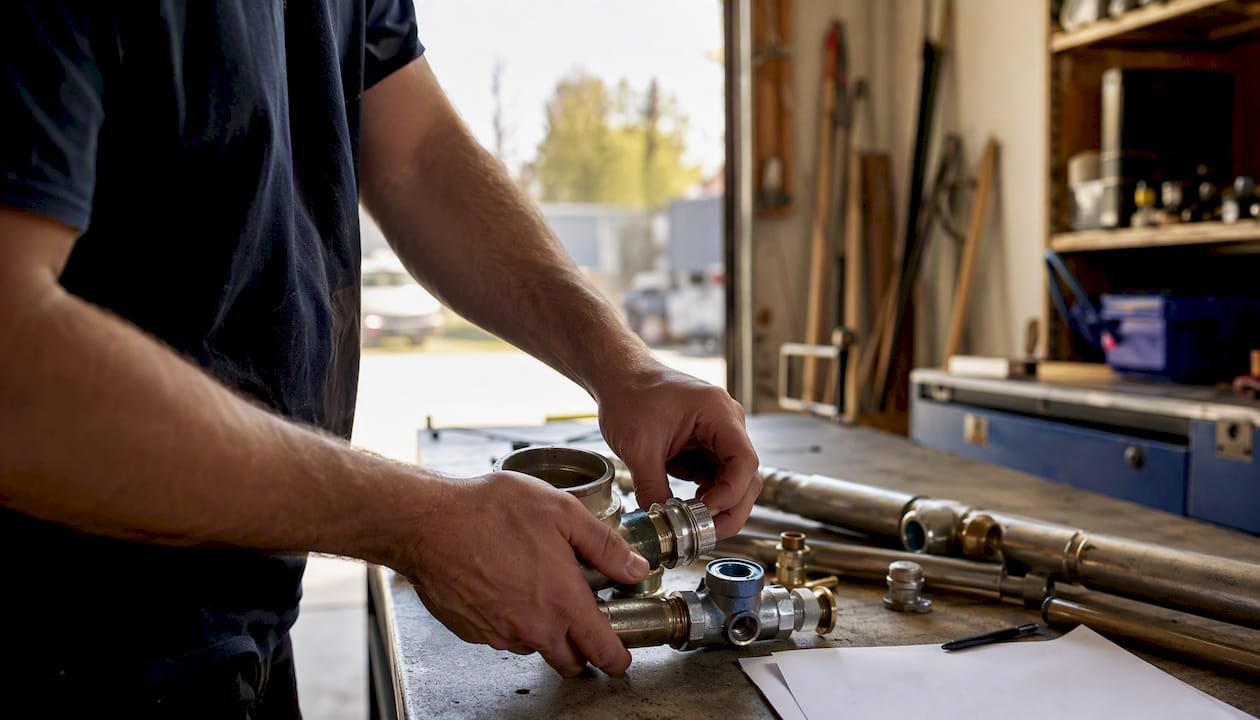
Local trades business: An established plumbing firm wants a redesign with a quote-request form and local SEO improvements. Budget: £4,000 design and build, £500 SEO setup, £400 content, £300 first-year hosting. Total: roughly £5,200.
Small ecommerce store: An independent retailer with 50 products needs a Shopify rebuild with payment integration. Budget: £8,000 design and build, £600 product photography, £500 SEO migration, £900 first-year Shopify subscription and apps. Total: roughly £10,000.

Clinic with online bookings: An aesthetic clinic needs a redesign with an integrated booking system and accessibility compliance. Budget: £14,000 design and build, £2,000 booking system integration, £800 accessibility testing, £1,200 first-year hosting and maintenance. Total: roughly £18,000.

Each of these scales in fairly predictable ways. Add more product categories or booking types and expect development costs to rise proportionally. Cut a photography shoot or reduce page count and the total drops accordingly. Use these as a starting frame, then adjust for your actual page count, integrations and content needs before requesting quotes.
What does a real UK website redesign project look like?
Leigh & Co needed a website that reflected the calibre of their work and gave prospective clients a reason to get in touch, not just browse and leave. The redesign focused on a clearer service structure, stronger visual identity and a build designed to convert enquiries rather than simply display information.
Jarvis & Co delivered a full redesign covering design, development, content structure and launch, drawing on over 15 years of agency experience serving UK small and medium businesses. The project moved through discovery, design and build phases with client sign-off at each stage, avoiding the scope drift that derails so many redesigns.
You can read the full breakdown, including the approach taken and the outcomes reported by the client, in the Leigh & Co case study.
- Clear scope agreed before any design work began
- Structured phases with defined milestones and approvals
- A finished site built to represent the brand's actual standard of work
If you want a similarly itemised assessment of what your own redesign would involve, get in touch with Jarvis & Co for a project quote.
Where can you save money without hurting the finished site?
Cost control on a redesign is about sequencing and discipline, not cutting corners blindly.
- Stage your priorities: launch the core pages first, then add secondary features (blog, resource hub, advanced filtering) in a second phase once budget allows.
- Use proven design frameworks rather than reinventing layout patterns from scratch. This is one of the fastest ways to cut design hours without sacrificing quality.
- Limit unique page templates to the essentials. Every additional bespoke layout adds design, build and testing time.
- Prepare your content (copy, images, product data) before development starts. Agencies waiting on content is one of the most common causes of timeline slippage and added cost.
- Negotiate a staged delivery and payment schedule so you're not committing full budget before seeing working results.
On platform choice: Wix and Squarespace work well for cost-sensitive brochure sites where speed matters more than flexibility, with basic plans commonly running £10–£30 a month. WordPress with WooCommerce suits businesses wanting long-term control and lower platform lock-in, provided you budget for a developer to maintain it. Shopify makes sense the moment ecommerce becomes central to your business, since its subscription bundles hosting and security that you'd otherwise manage separately.
The trade-off worth understanding: a cheap hosting plan or bare-bones platform subscription looks attractive on paper, but if it can't handle your traffic growth or lacks proper security updates, you'll pay for a second rebuild sooner than you'd like. Migrating between platforms later, especially while trying to preserve search rankings, often costs more than getting the platform choice right the first time.
For projects where content and SEO structure matter as much as design, it's worth reading our guide to SEO friendly web design before you finalise a brief, and the UX design tips for ecommerce redesigns if your rebuild involves product pages and checkout flows.
When is a website redesign actually worth the spend?
A redesign earns its cost when your current site is actively losing you business, not when it simply looks a bit dated. If your bounce rate is high, your enquiry form barely gets used, or your site looks noticeably worse than your competitors' on a phone screen, that's a revenue problem dressed up as a design problem.
What I'd push back on is the instinct to chase the cheapest possible quote. I've seen the pattern too many times: a business saves £2,000 upfront on a bargain build, then spends double that eighteen months later fixing what wasn't built properly the first time. The businesses that get the most value from a redesign are the ones that treat it as an investment in conversion, not a cosmetic tidy-up. That mindset shift, more than any specific price point, is what separates a redesign that pays for itself from one that just moves the same problems onto a nicer template.
Jarvis & Co has spent over 15 years building websites for UK small and medium businesses, and the pattern holds consistently: clarity of scope before work starts produces better outcomes than chasing the lowest number on a quote.
How can Jarvis & Co help with your website redesign?
Jarvis & Co is the alternative to a generic template rebuild for UK SMEs weighing up their redesign options. Instead of piecing together a builder subscription, a freelance developer and a separate copywriter, you get design, development, content and basic SEO handled as one coordinated project with a single point of accountability.
Whether you need a straightforward visual refresh, a full small business redesign, an ecommerce rebuild on Shopify, or a platform migration that preserves your search rankings, the packages are scoped around your actual objectives rather than a one-size template. Every quote is itemised, so you can see exactly what you're paying for before committing budget.
If you'd like an itemised quote for your own project, visit the website design service page to get a proposal built around your business, or book a discovery call to talk through scope and timeline first.
Frequently asked questions
How much does a website redesign cost in the UK? Most UK small businesses pay between £3,000 and £8,000 for a professional redesign, while a simple visual refresh can cost £1,500 to £5,000. Ecommerce and specialist builds typically run from £10,000 upwards.
Is it cheaper to redesign an existing site or build a new one? Redesigning usually costs less than a full rebuild if you're keeping the same platform and reusing existing content, since less development and migration work is needed. Switching platforms entirely adds cost, particularly if search rankings need protecting during the move.
Do website design quotes in the UK include VAT? Not usually. Always check whether a quote is stated inclusive or exclusive of VAT before comparing suppliers.
How long does a typical website redesign take? A small business redesign usually takes four to eight weeks from discovery to launch. Ecommerce projects run eight to fourteen weeks, and enterprise or highly custom builds can take twelve to twenty weeks.
Should I use a website builder or hire a designer? Builders like Wix or Squarespace suit very simple sites with tight budgets and quick turnaround needs. A designer or agency makes more sense once your site needs to generate leads, handle complex functionality, or reflect a more established brand.
What ongoing costs should I budget for after launch? Expect hosting (£10 to £50+ a month), domain renewal, and either a maintenance retainer or ad hoc update costs. Ecommerce sites also carry platform subscription and transaction fees on top of these.
This article provides general budgeting guidance and does not constitute professional or financial advice. Confirm current pricing and contractual terms directly with your chosen supplier before committing to a project.
This article is general information, not a substitute for advice from a qualified financial advisor. Consult a qualified financial professional about your own circumstances before acting on anything here.
Sources
- Website Redesign Cost in the UK 2026: Full Breakdown
- Website Redesign Cost UK 2026 | SpotDev
- How Much Does a Website Cost? DIY vs Designer