Successful aesthetic clinic branding converts trust into bookings. It ties strategy, visual aesthetic and a conversion-ready website into one system, in that order. Skip the strategy stage and the logo won't save you. The single best next step is a proper brand and website scope, either commissioned from a clinic-specialist design partner or worked through with the checklist below.
TL;DR:
- Aesthetic clinic branding requires a clear positioning, target patient profile, and a defined key treatment focus before engaging with suppliers.
- Visual identity elements like logo, color palette, typography, and photography must be consistently applied across all touchpoints to reinforce trust and recognition.
- A well-structured website with dedicated treatment pages, fast performance, and clear booking calls to action significantly improves conversion rates.
- The full rebrand process typically spans four phases, lasting from two to six weeks per phase, with staged implementation recommended for tight budgets.
- Success relies on documented brand guidelines, proper photography, and a strategic approach that aligns messaging with the patient journey and builds system-wide consistency.
Table of Contents
- What is aesthetic clinic branding, and where do you start?
- What makes up a clinic's visual identity?
- How should a clinic website be structured to convert bookings?
- How do you align messaging with the patient journey?
- How long does a clinic rebrand take, and what should you budget?
- How Jarvis & Co approaches aesthetic clinic branding
- Author perspective: three mistakes clinics keep making
- How Jarvis & Co can help with your clinic's rebrand
- Sources
What is aesthetic clinic branding, and where do you start?
Aesthetic clinic branding is the full system that makes a patient trust you before they've even sat in the consultation room. It's not just a logo. It's the strategy behind who you treat, the aesthetic they see across every touchpoint, and the website that turns that trust into a booked appointment. Get the order wrong (aesthetic first, strategy as an afterthought) and you'll end up rebranding again in eighteen months.
Before you brief anyone, decide these things internally:
- Positioning: are you clinical-luxury, results-focused, or approachable and local?
- Target patient: age, income band, and the treatments they're likely searching for first.
- Pricing tier: premium, mid-market, or volume, because this dictates photography style and copy tone.
- Key treatments: the two or three services that should carry the brand, not a list of forty.
Once that's settled, your brief to a supplier needs specifics, not vague direction:
- Logo use cases: signage, Instagram avatar, favicon, embroidery on staff uniforms.
- One ownable colour, not five competing ones.
- A single photographic treatment for consistency across web, social and print.
- Two type families maximum, with clear hierarchy rules for headings versus body text.
- Booking integration needs, so the website build isn't an afterthought.
When you're vetting suppliers, ask for actual portfolio work in the aesthetics or wellness space, confirm they deliver editable Figma assets (not just flattened PDFs), check who owns the rights to any photography produced, and ask for a reference you can actually call.
Pro Tip: Ask any potential design partner to show you a brand guideline document from a previous clinic project, not just the final logo. If they can't produce one, they probably didn't build a system, they built a one-off design.
What makes up a clinic's visual identity?
The aesthetic is the layer patients absorb first, often on Instagram, before they've read a word of your positioning. It has to carry the strategy without you explaining it. Get this wrong and even the best positioning statement won't land, because nobody reads the strategy document. They scroll past your feed.
A useful way to think about this comes from a seven-element framework covering colour, typography, photography, iconography, layout, motion and micro-detail, and getting most of these right produces a coherent premium look without needing a full-time creative director on staff, as DigitalPolo's guide to brand aesthetics sets out.
- Logo: keep it simple enough to work at 16 pixels as a favicon and at three metres as signage above a clinic door.
- Colour: pick one ownable colour and build a restrained palette around it, rather than five shades fighting for attention.
- Typography: two families, one for headings and one for body copy, with a fixed hierarchy so nobody improvises font sizes in Canva.
- Photography: define lighting, crop guides, and retouching rules once, then apply the same treatment everywhere.
- Motion: short-form video now carries brand weight before the logo even appears, so framing, caption style and a consistent pacing rule matter as much as the palette.
A brand like Rains shows how a restrained core identity can still feel fresh, using small, controlled seasonal activations rather than constant reinvention. Clinics can borrow that discipline: keep the core system tight, and save the playful moments for a seasonal campaign rather than a rebrand.
Practices with a genuinely recognisable brand can spend 20 to 35% less per patient acquired, according to the Medical Spa Branding Guide from Aesthetix Media, largely because recognition and trust do some of the selling before a paid ad even gets clicked.
Pro Tip: Photograph one "hero" treatment room and one staff portrait set properly, with a professional and a consistent edit. That single shoot will outperform a dozen phone photos across your entire site and social feed.
How should a clinic website be structured to convert bookings?
Treat your website as architecture, not decoration. Its job is to guide an enquiry from first click to booked consultation, and that structure has to be designed in from the start rather than bolted on once the site looks nice, as Studio de la Sol's clinic brand strategy work argues.
Build it around a few firm rules:
- One dedicated page per treatment, never a single "services" page trying to cover twelve procedures.
- A clear booking call-to-action on every page, not just the homepage and contact page.
- Fast, mobile-first performance, since most patients are researching on their phone between appointments elsewhere.
- Schema markup for treatments and services, so search engines can surface you accurately.
- A well-maintained Google Business Profile with genuine reviews, which does more for local visibility than almost anything else.
- A booking widget embedded directly on treatment pages, with conversion tracking so you can see where enquiries drop off.
Speed matters here in a very literal sense: the longer it takes to respond to an enquiry, the more likely that patient books elsewhere. Pairing a technically sound SEO-friendly build with a fast follow-up process closes more of the enquiries your branding generates.
How do you align messaging with the patient journey?
Your core message needs four things nailed down: who you're speaking to, the primary benefit you offer, three proof points that back it up, and a tone, usually somewhere in the "clinical-luxury" register that feels precise rather than clinical-cold or overly salesy.
Map that message across the actual patient journey:
- Social discovery: a scroll-stopping image or short video that reflects your photographic treatment.
- Site landing page: the same tone and visuals, now with detail and a clear next step.
- Consultation: credentials and reassurance, echoing what they saw online.
- Aftercare: consistent follow-up that reinforces the premium experience they paid for.
Show real evidence, not vague claims: practitioner credentials, treatment volumes where you can state them honestly, and before-and-after galleries presented with appropriate consent and without exaggerated framing.
Pro Tip: Audit your own patient journey as a stranger would. If your Instagram feels premium but your booking confirmation email looks like a 2015 template, that gap is costing you conversions.
How long does a clinic rebrand take, and what should you budget?
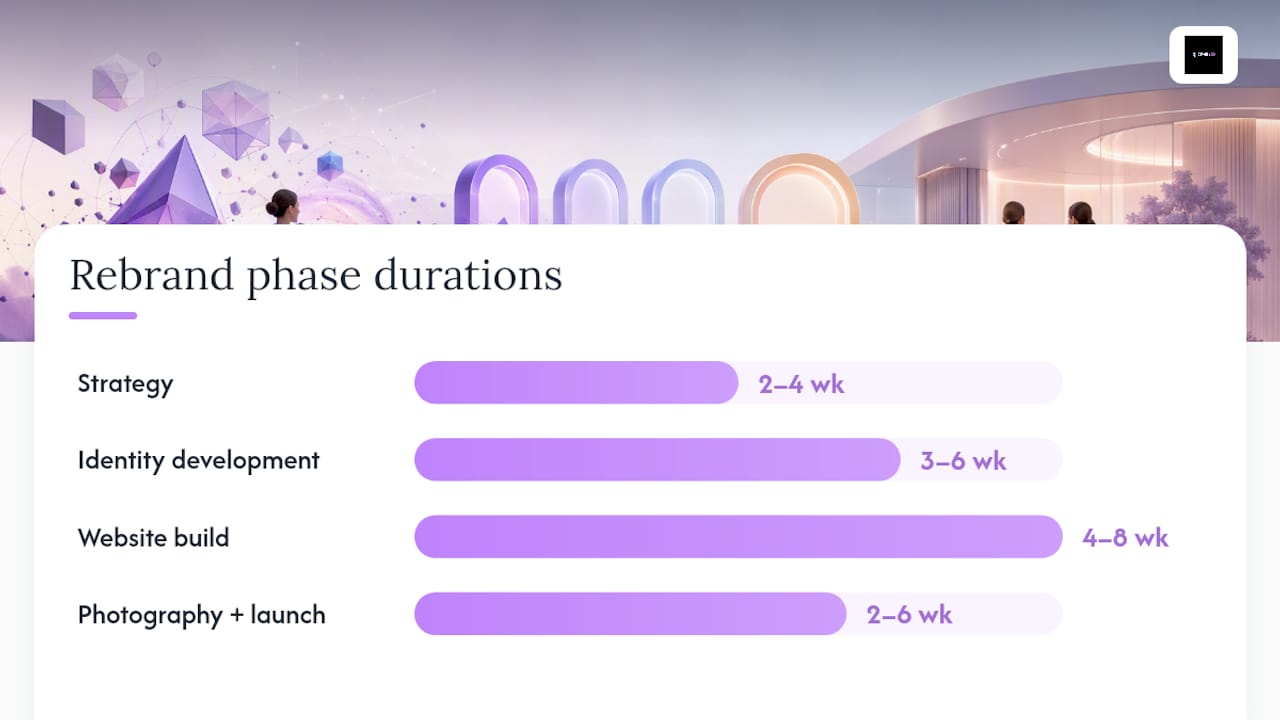
A full rebrand typically runs in four overlapping phases. Strategy takes 2 to 4 weeks, identity development 3 to 6 weeks, the website build 4 to 8 weeks, and photography plus launch another 2 to 6 weeks depending on how many locations you're shooting.
Investment ranges widely depending on scope. A single-site clinic with a documented system and one photography day sits at the lower end; multi-site groups needing bespoke shoots across several locations sit considerably higher. What moves the price most is bespoke photography days and the number of sites needing localised assets.
If cash flow is tight, stage the work rather than delaying it entirely:
- Launch a minimum viable brand first: logo, palette, hero photography and one treatment landing page with a working booking flow, often achievable within six to eight weeks.
- Finish the full website and remaining treatment pages in a second phase.
- Roll out secondary collateral (print, signage, staff uniforms) last, once the system is proven.
Marketing spend afterwards commonly sits around 7 to 10% of revenue, with local SEO, Google Business Profile and review management delivering the strongest return of any channel.
How Jarvis & Co approaches aesthetic clinic branding
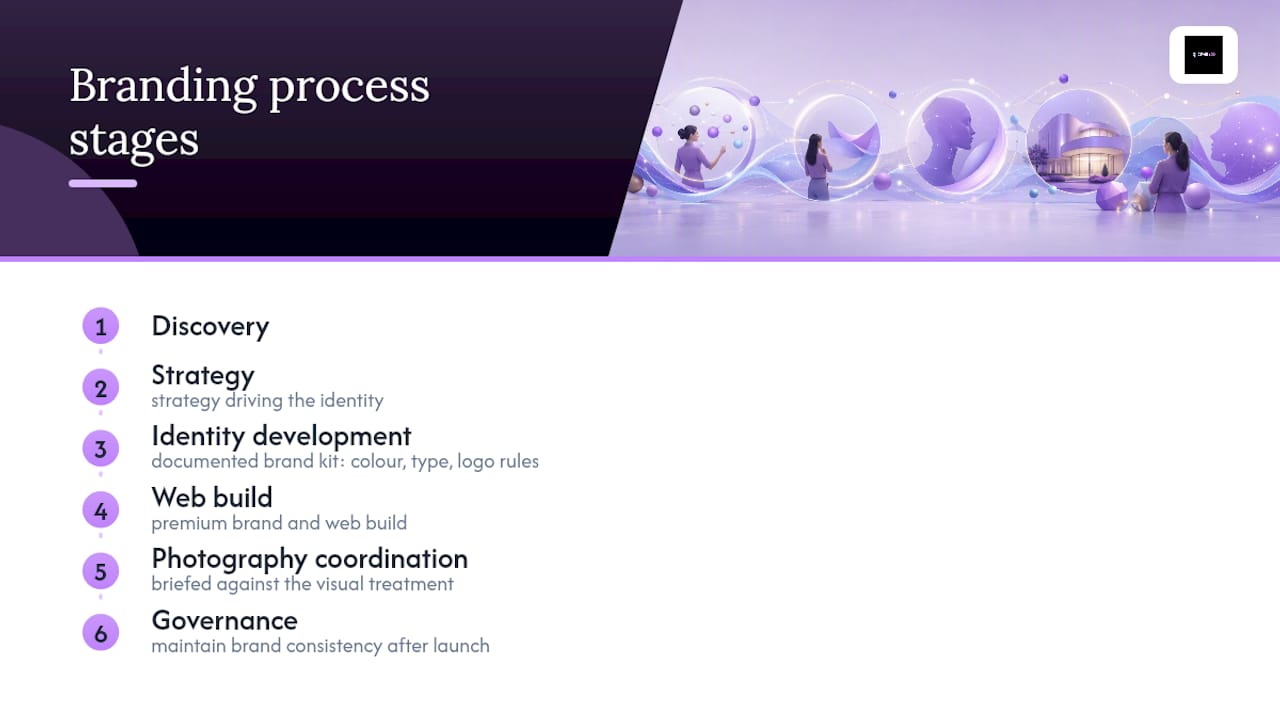
The process runs in a sequence including discovery, strategy, identity development, web build, photography coordination, and governance to help maintain brand consistency after launch. Nothing skips ahead of strategy, because a logo built before positioning is decided almost always gets reworked later.
Deliverables may include a documented brand kit covering colour, type and logo usage rules, editable design assets, brand guidelines for team use, CMS training for content updates, and coordinated photography shoots briefed against the visual treatment.
The Leigh & Co case study shows this approach applied to a premium brand and web build, with strategy driving the identity rather than the reverse. A similar governance-first structure has shaped work for Level Up Fitness, keeping visual consistency intact as the brand scaled across new touchpoints.
A brand system only holds up once it's documented and distributed properly, whether that's a Figma library, a living brand microsite, or simple templates content creators can actually follow without guessing.
Author perspective: three mistakes clinics keep making
The most common error is starting with a logo before the strategy exists. Fix it by writing your positioning and target patient down first, on paper, before opening any design software.
Second is inconsistent photography, different lighting and edits across Instagram, the website and print. One documented treatment, applied every time, solves this permanently.
Third, and most costly, is a clumsy handoff between website and booking. If enquiries take hours to get a response, monitor speed-to-lead and fix it before touching the visuals again.
— Luke
How Jarvis & Co can help with your clinic's rebrand
A typical clinic branding package covers strategy, a full visual identity, a conversion-ready website build, and coordinated photography, delivered as one connected system rather than separate jobs handled by different freelancers. A website that doesn't match the photography treatment, or a logo built before positioning is agreed, often requires rework.
Starting is simple. Book a discovery call, or send over a brief covering your target patient and key treatments. The first 30 days typically cover strategy and initial identity concepts, so you're seeing real direction fast rather than waiting months for a reveal. If you already know you need a new logo design, a rebuilt website, or refreshed print collateral for reception and signage, get in touch and we'll scope the right starting point for your clinic.
Sources
For photography briefs specific to brand campaigns, Dock Street's editorial photography guide is a solid practical reference. If you're planning wider marketing activity alongside your rebrand, our aesthetic clinic marketing growth guide covers channels and KPIs in more depth.